
Reviewed · SANTO ANTAO TOURS
Ribeira Grande: Hiking Day Trip to Ribeira de Torre
The best part of this six-hour outing is the way it links Santo Antão’s mountain scenery with everyday rural life. You walk from Faja da Cima toward Rabo Curto and Lombo de Pedra, pass terraces and small homes, then reach Chu Chu, where the Ribeira Grande valley opens below you. A waterfall and natural swimming pool add a welcome bit of fun to the route.
I like the hotel pickup and return, since it removes the hassle of arranging transport to a high mountain trailhead. I also like the mix of crops, villages, local conversations, and grogue production. The main caution is the route itself: it is not suited to children under 12, people with mobility impairments, wheelchair users, or anyone uneasy with heights.
Key points at a glance
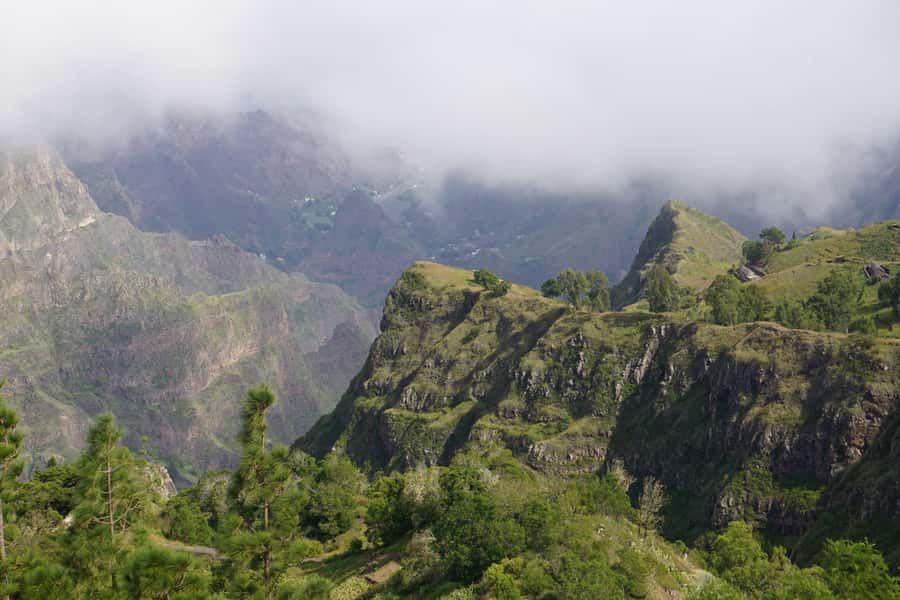
- Start high at 1,480 meters: The drive to Faja da Cima puts you straight into Santo Antão’s mountain country.
- Walk through working farmland: Expect agricultural terraces, sugar cane, fruit trees, banana plants, and coffee plantations.
- Reach Chu Chu village: The village, also called Xoxo, gives you broad views across the Ribeira Grande valley.
- Swim beside a waterfall: A natural pool offers the chance to cool off, though swimming is optional.
- Finish with local grogue: A visit to a rum distillery connects the hike with one of Cape Verde’s best-known rural products.
- Choose your group style: Private and small-group options are available, with guides speaking English, French, Portuguese, or Spanish.
From Ribeira Grande to Faja da Cima at 1,480 meters
Your day begins with pickup at your accommodation in Ribeira Grande. Be ready in the hotel lobby 10 minutes before the scheduled time. The included transfer matters here because the walking route starts in Faja da Cima, far above town at an altitude of 1,480 meters.
That high starting point shapes the whole outing. Rather than spending the first part of the day making a long climb from the coast, you begin among Santo Antão’s mountain slopes and cultivated terraces. The drive also gives you time to settle in before the four-hour hike begins.
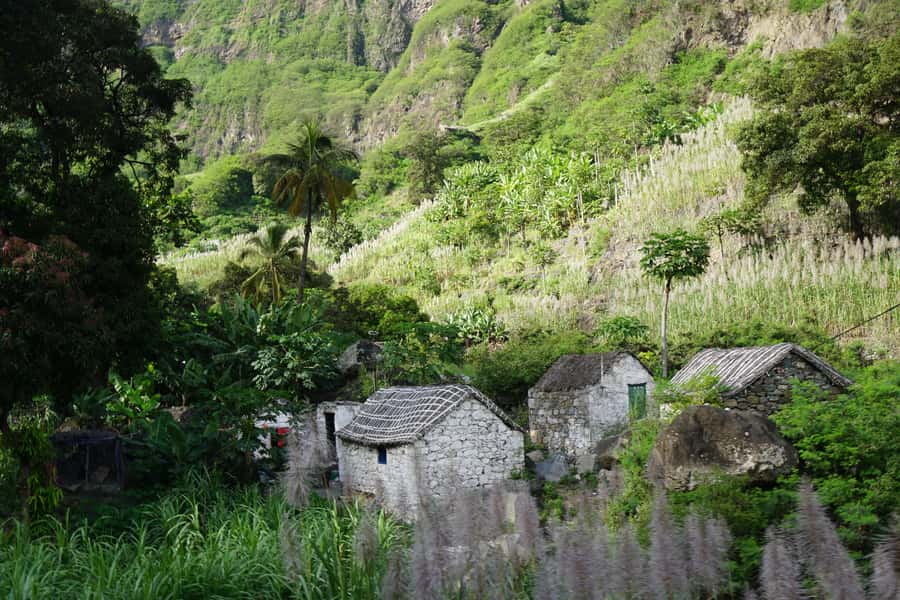
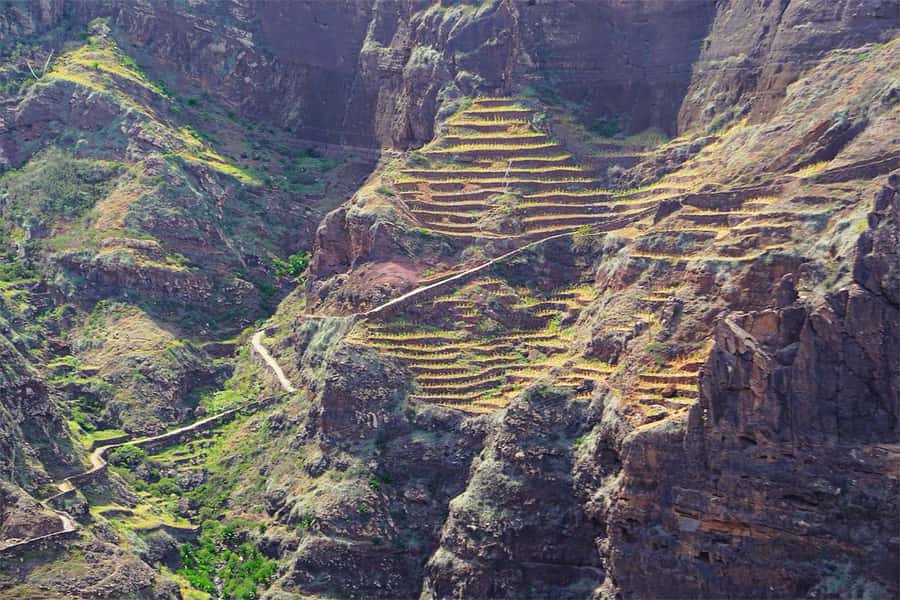
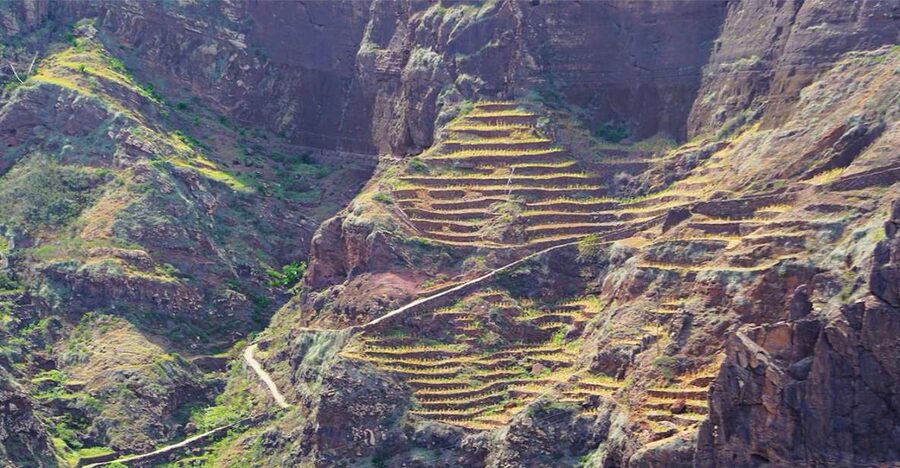
The route is built around scenery that changes as you walk. At first, you head up the slopes toward Rabo Curto through natural vegetation. Then the farmland becomes more prominent, with terraces and small houses marking the hillsides. These terraces are not just pretty patterns for photographs. They show how people make a living on steep ground, using every workable patch of soil.
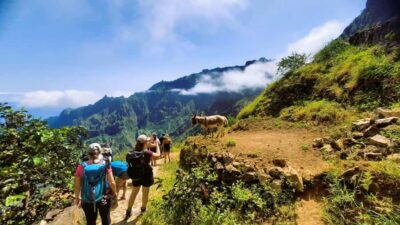
You should expect a proper mountain walk, not a short village stroll. Comfortable clothing, hiking shoes, water, a hat, and sunscreen are all listed as essentials. The high starting point may feel different from the warmer conditions in Ribeira Grande, but the tour information does not give a detailed weather forecast or trail surface description, so sensible footwear is the safe choice.
More Hiking Tours in Santo Antao
- Santo Antão: Hiking Cova Volcano Crater to Ribeira Paúl
★ 4.5 · 31 reviews - Santo Antão: Ponta do Sol & Fontainhas Guided Trip with Hike
★ 4.8 · 9 reviews - Santo Antão: Trekking Cova de Paúl Volcano Crater – Ribeira de Paúl
★ 5.0 · 8 reviews
Rabo Curto and Lombo de Pedra: farming on steep slopes
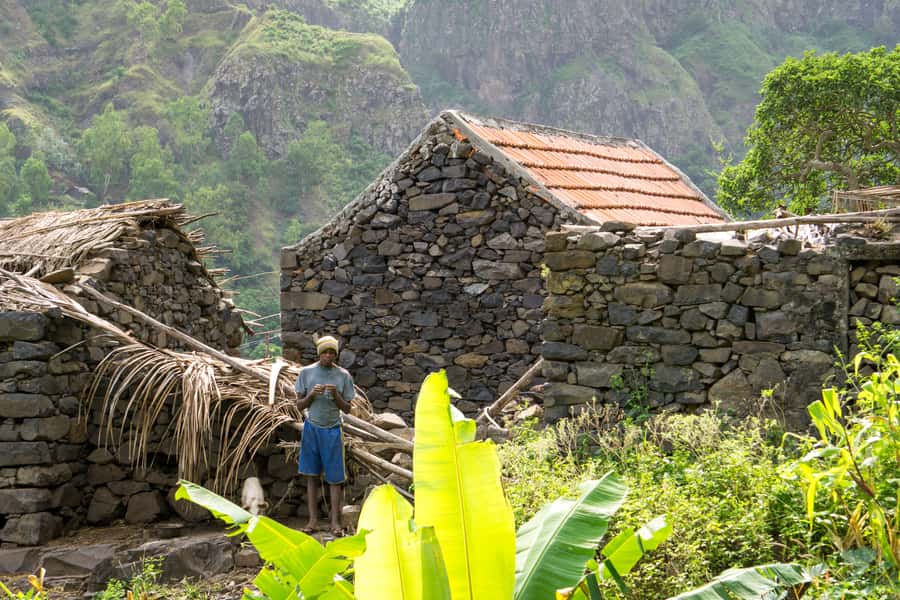
The route toward Rabo Curto and Lombo de Pedra gives the day its rural character. You pass small homes and cultivated terraces while crossing the slopes above the Ribeira de Torre valley. The setting is open enough for wide views, but the focus remains close to the ground: crops, paths, stonework, and daily village life.
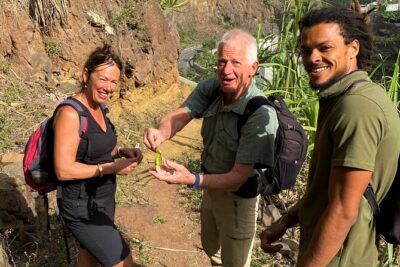
This is where a guide adds real value. A guide can explain what is growing around you and answer questions about local plants and farming. One named guide, João, has been praised for conversation with local people and for explaining the country’s local fauna and flora. Guide assignments can vary, but the tour offers a live guide in English, French, Spanish, or Portuguese, and the best approach is to ask questions as you walk.
The route includes sugar cane and fruit trees. Later, on the descent, you see banana and coffee plantations. That sequence helps you understand how the valley changes with altitude and water. You are not simply looking at a scenic mountain view, you are seeing the crops that make the valley useful.
The small houses are another part of the appeal. Their scale against the hills gives you some of the day’s strongest photo opportunities. Bring a phone or camera, but keep one hand free on uneven sections and steep paths. The tour specifically warns people who are afraid of heights, so anyone who dislikes exposed slopes should think carefully before booking.
Crossing into the Ribeira de Torre valley
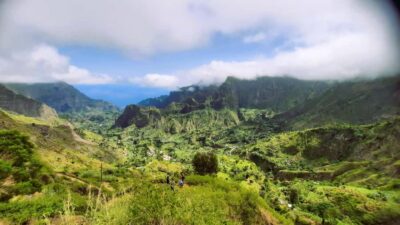
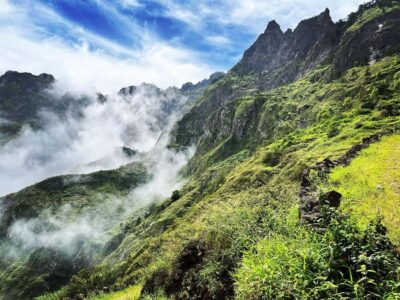
As the hike continues, you cross hills toward the Ribeira de Torre valley. This is the central scenic stretch, with mountains, rock formations, terraces, and scattered homes arranged across the view. The route gives you several kinds of scenery in one outing: high slopes at the start, working farmland in the middle, and the greener valley below.
The views are likely to be one of the strongest reasons to choose this trip. The itinerary promises sweeping views from Chu Chu across the Ribeira Grande valley, along with layered agricultural terraces and unusual rock formations. Those details are useful for setting expectations. This is not a hike aimed at one famous lookout only. The scenery builds as you move through the countryside.
I like that the walking route passes through villages rather than keeping you on an isolated mountain path. You get a closer look at rural Santo Antão and a chance to speak with local people. The visitor experience remains structured and guided, but it is not reduced to a quick roadside photo stop.
The tradeoff is pace. A four-hour hike with village passages, a waterfall, a swim option, and a distillery visit leaves plenty to see, but it does not mean you can linger indefinitely at every stop. If photography is your main goal, a private or small-group departure should make it easier to pause and ask for explanations than a larger group would.
Chu Chu, also called Xoxo
Chu Chu village, also known as Xoxo, is a key point on the route. From here, you get broad views of the Ribeira Grande valley. The village is not presented as a formal attraction with a long list of monuments. Its value is the setting and the chance to see how homes and farmland fit into the mountain terrain.
This stop also gives the route a human center. You have already walked past terraces and houses, but Chu Chu is where the valley views and village life come together. It is a good place to take photographs, listen to the guide, and ask about the crops and communities you have passed.
The supplied tour information does not promise a meal or a specific village activity, so you should not book this expecting a food tour or a staged cultural performance. The cultural element is more direct and ordinary: walking through rural communities, seeing local agriculture, and speaking with people along the way.
That can be more rewarding than a polished attraction, but it requires a respectful attitude. Follow the guide’s lead when stopping near homes or speaking with residents. The point is to observe rural life without treating the village as a backdrop.
More Hiking Tours in Cape Verde:
- Fogo Island: Pico do Fogo Volcano Summit Hike
★ 4.6 · 92 reviews - Santo Antão: Day Trip by Car or Trek
★ 5.0 · 72 reviews - Serra Malagueta: Principal Valley Hike & Lunch with Locals
★ 4.7 · 64 reviews - Santiago Island: Serra Malagueta & Tarrafal Beach Trek Tour
★ 4.8 · 61 reviews
Waterfall views and a natural swimming pool
One of the day’s most appealing moments comes when you pass close to a mountain waterfall. Nearby, you have the option of swimming in a natural pool with local people. This is a useful feature for anyone who wants the hike to include more than views and uphill walking.
Swimming is optional, so you can still enjoy the stop if you would rather stay dry. The information provided does not give details about changing facilities, water temperature, or the exact pool conditions. Wear swimwear under your hiking clothes if you want the option, and carry only what you are comfortable managing on the trail.
The pool is also a good reason to pace yourself. A refreshing stop can break up the four-hour walk, especially after the higher slopes and valley crossing. Still, do not assume this is a resort-style swimming stop. It is a natural pool, and the tour does not list towels, changing rooms, or food and drinks as included.
The waterfall and pool bring variety to the route, but the safety warning about heights remains important. Mountain paths can feel very different from a flat urban walk. If you are uncomfortable looking down from steep slopes, the scenery may not compensate for the worry.
The descent through bananas and coffee
The route heads down after the waterfall and pool. On the way, you see banana and coffee plantations, adding another layer to the valley’s agriculture. The change from upper terraces to lower plantations gives you a clear sense of how crops are spread through the area.
Descending may feel easier than climbing, but it still puts pressure on knees and ankles. Good hiking shoes are more useful here than casual trainers, especially if the ground is uneven. The tour does not state the total distance or technical grade, so you should judge your fitness by the four-hour walking time and the mountain setting rather than by the six-hour total duration alone.
This section is also a good test of whether the tour suits you. If you want a gentle sightseeing day with little walking, choose another activity. If you enjoy moving through farmland and seeing the valley change as you go, this route offers much more than a viewpoint reached by vehicle.
Grogue production at the end of the route
The final stop is a local rum distillery known as grogue. Cape Verde’s sugar cane appears earlier in the walk, so the distillery visit gives that crop a practical connection. You see not only where sugar cane grows, but also how it relates to a local drink and rural production.
The timing of this visit matters. Grogue production season runs from January 1 through May 31. If you travel during those months, you have a better chance of seeing production activity. Outside that period, the distillery visit is still part of the route, but you should not expect the same seasonal operation.
Food and drinks are not included in the $100 price, so budget separately if you want refreshments. The provided details do not confirm whether tasting is included, so ask the operator before booking if a tasting is important to you.
Ending at the distillery is a smart finish because it shifts the day from scenery to local industry. You have seen sugar cane in the fields, and now you get a cultural stop tied to the valley’s crops. It gives the outing a stronger sense of place than ending with a simple drive back to town.
Is $100 a fair price?
At $100 per person, this is not the cheapest way to take a walk in Santo Antão. The value depends on how much of the day you would otherwise need to arrange yourself.
The price includes pickup and drop-off at your Ribeira Grande accommodation, a four-hour guided nature hike, a multilingual guide, and liability insurance. You also get transport to a trailhead at 1,480 meters, village visits, the waterfall and pool stop, and the grogue distillery visit.
If you tried to arrange transport, a route guide, and a rural distillery visit separately, the convenience would quickly become part of the cost. I see the strongest value in the logistics and guiding, not simply in the walking time. The guide helps connect the views, crops, villages, and local production into one day.
The price is easier to justify for a private or small group, particularly if you want to ask questions or take photographs at your own pace. If you are comparing it with a basic transfer or an unguided walk, it will seem expensive. If you want a full day built around rural culture and mountain scenery, it is more reasonable.
Remember to bring your own water and plan for food, since neither food nor drinks is included. The tour lasts six hours, with about four hours of hiking, so this is not a quick morning activity.
Who should book this Ribeira de Torre hike?
This trip suits you if you want to see Santo Antão away from the main town and are comfortable walking through mountain villages. It is especially good for people who value crops, local conversations, and everyday rural settings as much as dramatic views.
You will probably enjoy it if you:
- Can manage a four-hour mountain hike
- Like steep valley scenery and agricultural terraces
- Want a guide who can explain plants, animals, and local life
- Would enjoy an optional swim in a natural pool
- Prefer private or small-group touring
- Want hotel pickup and return in Ribeira Grande
You should think twice if you dislike heights, have limited mobility, or want a relaxed sightseeing drive with only brief walks. Children under 12 are not suitable for this activity, and it is not designed for wheelchair users.
The swimming stop may also influence your choice. It is an option, not the purpose of the day. Book this for the combination of hiking, views, villages, crops, and grogue, with the pool as a welcome extra.
Practical advice before you go
Wear hiking shoes with a firm grip and comfortable clothes that allow free movement. A hat, sunscreen, and plenty of water are essential. Since food and drinks are not included, take care of your own snack and refreshment needs before setting off.
If you hope to see grogue production in action, aim for the January 1 to May 31 season. If you care about swimming, wear suitable clothing beneath your hiking clothes, since changing arrangements are not specified.
The tour offers English, French, Portuguese, and Spanish-speaking guides. A private or small-group format is worth considering if you want more time for questions. João is one named guide associated with the experience, and his strengths include local conversation and explanations of fauna and flora, though the assigned guide may differ.
You can cancel up to 24 hours before the activity for a full refund, and the reserve-now, pay-later option keeps your plans flexible. Pickup is included, but you need to wait in your hotel lobby 10 minutes before the scheduled time.
Should you book it?
Book this tour if you want a full, active day that joins Santo Antão’s mountain views with real rural life. The strongest features are the high trailhead, the terraces and plantations, the Chu Chu viewpoint, and the chance to swim near a waterfall before visiting a grogue distillery.
Skip it if heights make you uneasy or if four hours of mountain walking sounds like too much. At $100, the trip makes the most sense when you value the guide, transport, and cultural context. For a fit visitor staying in Ribeira Grande, it is a well-rounded way to see the Ribeira de Torre valley without having to organize the route yourself.
FAQ
How long does the Ribeira de Torre hiking trip last?
The full activity lasts six hours, including transportation, the hike, stops, and the return to your accommodation. The guided nature hike itself lasts about four hours.
Where does the hike begin?
The hike begins in Faja da Cima, at an altitude of 1,480 meters. Pickup is provided from your accommodation in Ribeira Grande.
Is swimming included?
You have the option to swim in a natural pool near a waterfall. Swimming is not required, and food and drinks are not included.
What languages do the guides speak?
Guides are available in English, French, Portuguese, and Spanish.
Is the tour suitable for children or wheelchair users?
The activity is not suitable for children under 12, people with mobility impairments, or wheelchair users. It is also not recommended for people who are afraid of heights.
Can I see grogue production during the visit?
The grogue production season runs from January 1 through May 31. The distillery visit is part of the route, but production activity may depend on the season.
More 1-Day Tours in Cape Verde
- Santiago: Landscapes, Street Art, and Markets Day Trip
★ 4.8 · 316 reviews - Sal island: Secrets of a Native Guide Day trip with Lunch
★ 4.8 · 139 reviews - Sal: Full-Day Trip Around the Island with Lunch
★ 4.3 · 117 reviews - From São Vicente: Santo Antão Day Trip with Local Guide
★ 4.7 · 101 reviews
Just added around Cape Verde
- Praia: Plateau and Cidade Velha Guided Tour★ 5.0 · 3 reviews
- Praia city to the airport.★ 5.0 · 3 reviews
- Praia City Tours★ 3.4 · 3 reviews
- Best of Santiago Island: Cidade Velha, Workshop & Tarrafal Beach Tour★ 4.5 · 3 reviews
- Facial treatment★ 5.0 · 3 reviews
- Mindelo Cultural: city tour with live music and dance class★ 5.0 · 3 reviews
- Cape Verde: Best Hikking Trails of Santiago Island – 6 Days★ 5.0 · 3 reviews
- From Praia: Full-Day Guided Fogo Island Tour★ 4.2 · 3 reviews
Santo Antao Tours, compared.
Full-Day Island Tour in Santo Antão with Lunch Included
Read our review →
Trekking Cova de Paúl Volcano Crater – Ribeira de Paúl
Read our review →
Browse the lists this tour appears in