
Reviewed · SAL TOURS
Santa Maria: Sea Turtle Watching Experience on Sal Island
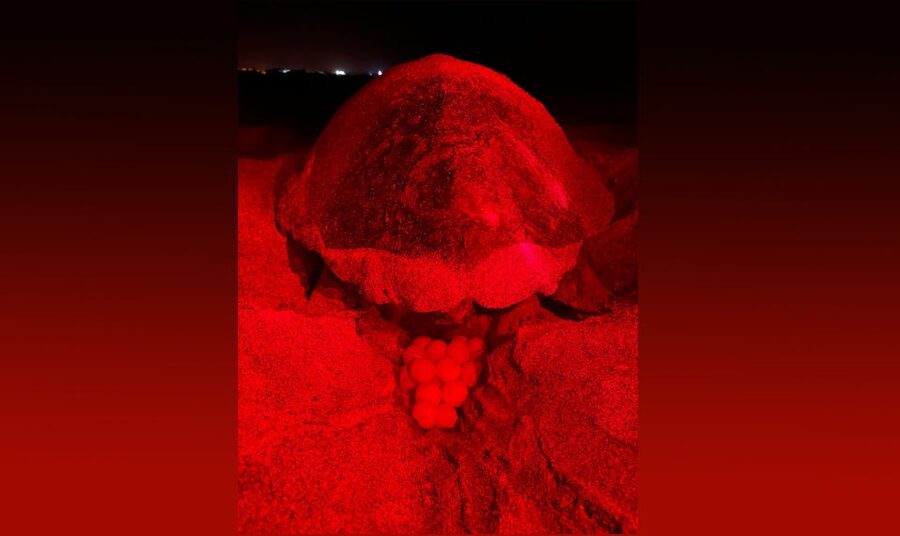
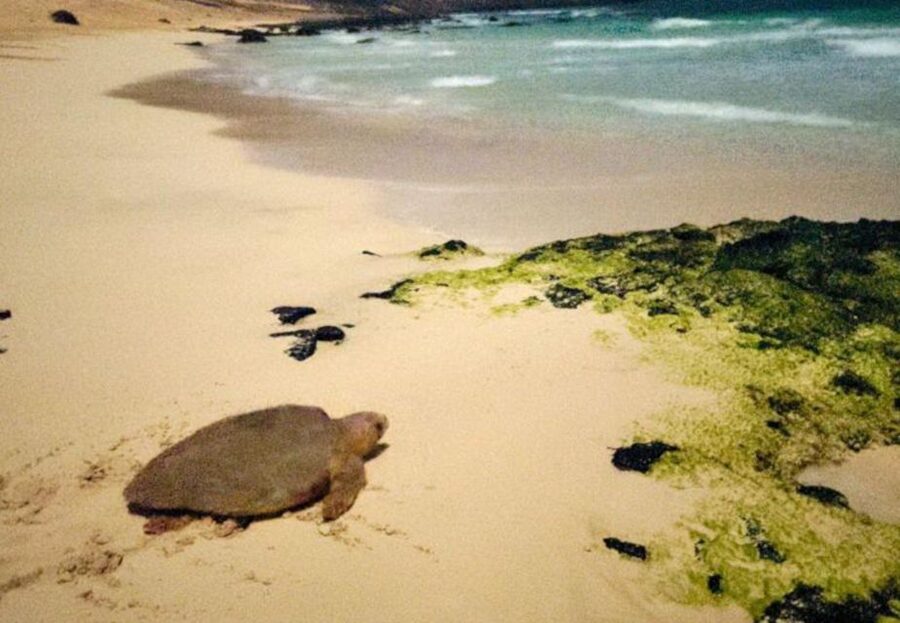
On Sal, the night’s main event may be a loggerhead, or common yellow turtle, hauling herself from the sea, digging a nest, laying eggs, covering them, and returning to the waves. You sit quietly on the sand and watch a wild animal follow an ancient routine. It is a rare chance to see nature at close range without a glass case or a zoo fence.
I like two things here. The guides put turtle welfare first, using infrared lighting and strict rules about silence, darkness, and distance. I also like the chance to learn from local biology and conservation staff. Guides such as Nany, Dani, and Chan explain the turtle’s life cycle clearly, from nesting to the threats these animals face.
The catch is simple: nature keeps its own timetable. You may wait 30 minutes, two hours, or longer, and nesting is never guaranteed. The tour has recorded a 99 percent success rate over the past five years, but that still leaves room for a slow or empty night. The beach is dark, sandy, and not suitable for young children or anyone with limited mobility.
What makes this Sal turtle tour special
- Watch the complete nesting routine: A lucky group may see a turtle arrive, dig, lay eggs, hide the nest, and return to the sea.
- Meet guides with field experience: Nany, Dani, and Chan are praised for clear explanations and careful handling of the observation.
- Use infrared lighting, not flash: This lets you see without startling or disorienting the turtles.
- Reach a quiet beach within about 30 minutes to an hour: Pickup is from Santa Maria accommodation in an air-conditioned vehicle.
- Look for more than one turtle: Several may come ashore during the evening, though some can turn back if disturbed.
- Pay $41 per person for a focused conservation outing: The value depends on how much you care about seeing wild animals responsibly rather than collecting a guaranteed photo.
A night on Sal’s nesting beaches
The tour begins after dark, normally around 8 PM, though current environmental rules allow the schedule to shift between 7:30 PM and 10:30 PM. You receive the exact pickup time on the morning of the activity, so keep your evening flexible and check your messages before setting out.
From Santa Maria, you ride in an air-conditioned vehicle toward one of Sal’s quieter beaches. The drive is usually about 30 minutes, though the stated timing allows up to an hour. That difference matters if you have booked dinner, a show, or another evening activity. I would leave the rest of the night open.
The road trip is part of the change of mood. Santa Maria’s lights and restaurants fall away, and the evening becomes quiet. After the vehicle stops, you walk over sand to a selected stretch of beach. Comfortable shoes matter more than fashionable footwear here. This is not a paved promenade, and you may walk farther than expected while the guides search for a turtle.
More Turtle Watching in Sal
- Santa Maria: Sal Island Sea Turtle Watching Experience
★ 4.5 · 256 reviews - Turtle Watching Adventure
★ 5.0 · 98 reviews - 4h Turtle Watching with SSV Buggy Night 4WD
★ 5.0 · 20 reviews
Why the waiting is part of the experience
At the beach, the guides explain what you are about to see. You learn about Cape Verde’s three turtle species, with the common turtle, also called the yellow turtle, being the most frequent nest builder on the islands. Sal’s sandy beaches are important nesting sites, which gives the outing a purpose beyond a simple wildlife sighting.
Then comes the least glamorous but most important part: waiting. The guides may move off to look for a turtle while you remain in a quiet area. Some groups wait less than 30 minutes. Other nights may require up to two hours or more, depending on the animals and conditions.
Bring patience, not a checklist. The starry sky can be pleasant company while you wait, but there is no entertainment provided on the beach. You will be sitting or standing on sand in the dark, with limited movement and conversation. If you need a fast-moving activity, this is the wrong choice.
The guide may locate a turtle that is still choosing a place to nest. In that case, the group must wait and watch carefully. A turtle can also approach the shore, notice people, and turn back. This is disappointing, but it is also a useful reminder that the animal is in charge.
Seeing the turtle without disturbing her
Once a turtle begins nesting, the group is usually divided into smaller viewing groups. That helps reduce crowding around the animal and gives you a better view than one large circle of people would allow. A group of about 20 people has been reported, so the smaller viewing arrangement is important.
You are told to remain as still and silent as possible. No flash photography, video recording, or personal flashlight is allowed. Wear black, dark brown, dark blue, or dark gray clothing so you do not startle or confuse the turtle.
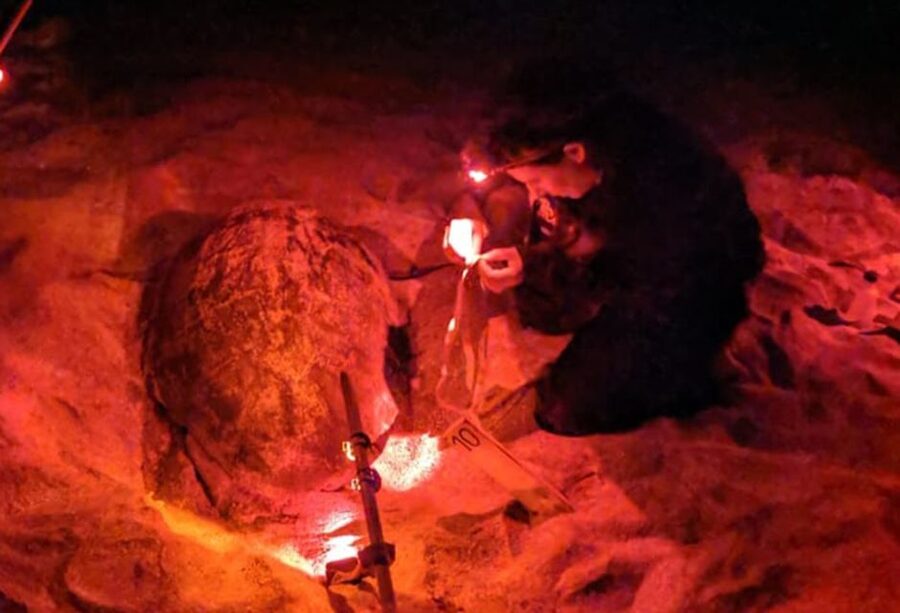
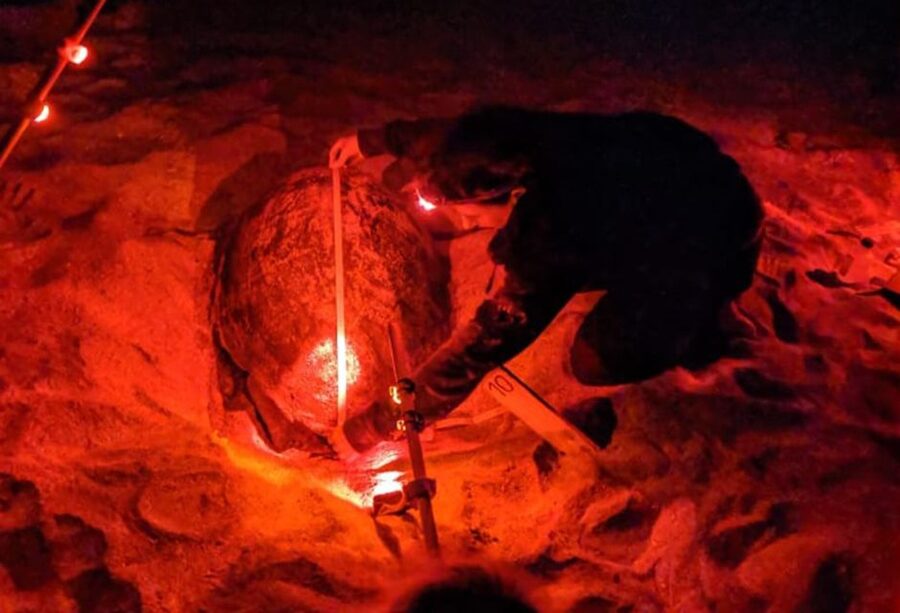
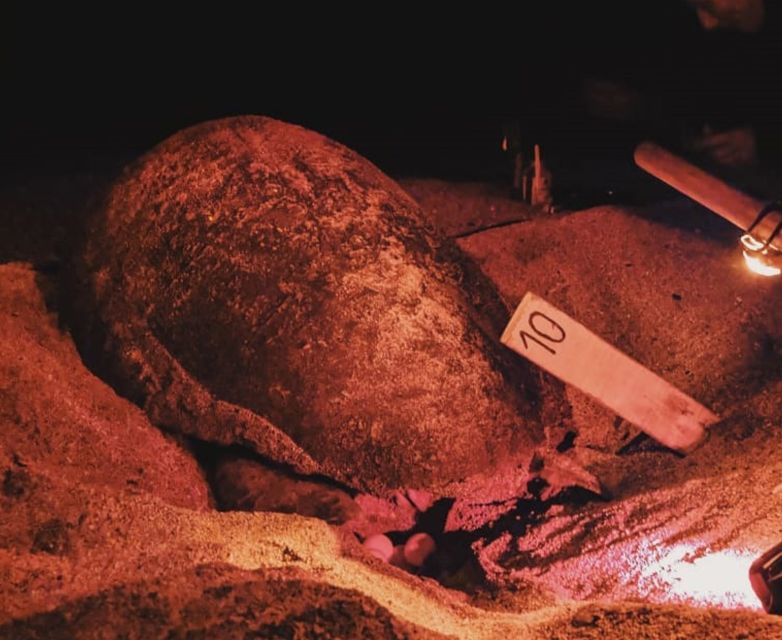
The guides use infrared lighting. This provides enough visibility for the group while reducing the chance of disrupting the nesting process. You might be close enough to see the turtle’s shell and movements in detail, but close does not mean touch. Keep your hands to yourself and follow the guide’s position.
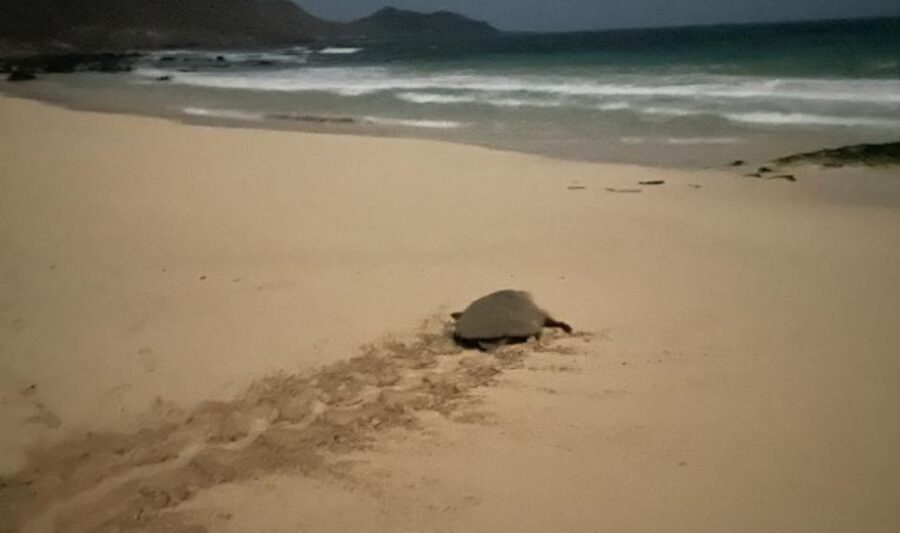
The best viewing position comes during the egg-laying stage. The turtle digs a deep nest with her rear flippers, settles over the hole, and releases her eggs. She then covers the nest with sand, often spending considerable time disguising its exact location before crawling back toward the water.
The full sequence can take around 30 to 45 minutes once you have found the animal, though exact timing depends on what is happening when you arrive. Seeing the whole cycle gives the evening much more meaning than a quick glimpse of a turtle at the shoreline.
What the guides add to the evening
The guides are the heart of this activity. Nany is praised for explaining the turtle process in detail and keeping the mood calm. Dani is also named as a helpful guide, while Chan is noted for his clear talks about turtles and Cape Verde. The guide team speaks Spanish, French, Portuguese, and English.
Their job is not only to point out an animal. They explain turtle evolution, physical features, nesting habits, and the reasons welfare rules matter. You learn why light, noise, and movement can cause trouble for a female searching for a nesting place.
The strongest part of the guiding is the balance between information and restraint. You get answers to questions, but the turtle is never treated like a stage performer. Some guides have worked alongside local conservation teams, and the outing may include experts taking measurements. That gives you a clearer sense of the scientific work behind turtle protection.
The guides also help you understand what you are seeing. A turtle may spend a long time covering her nest after laying eggs. To a casual observer, she may seem to be doing nothing. The explanation turns that slow period into part of the story.
The language options are useful for mixed groups. If you are booking for a family or a group of friends with different language needs, confirm that your preferred language is available when you reserve. The listed languages are English, Portuguese, Spanish, and French.
Same island, a completely different day out:
- Sal: Island Experience Tour with a Certified Local Guide
★ 4.8 · 3,249 reviews - Sal: All-Inclusive Salt Lake, Blue Eye and Shark Bay Tour
★ 4.7 · 2,033 reviews - Experience on Sal Island with native and certified guide (including sharks)
★ 5.0 · 1,166 reviews - From Sal Island: Blu eye, Salt lake, Lemon Sharks & Palmeira
★ 4.6 · 1,003 reviews
Conservation rules are not decoration
This outing works only if people accept that the turtles come first. The dark clothing rule may seem fussy until you consider how easily a bright shirt or sudden beam could affect a turtle approaching the beach.
The ban on flash photography is especially important. You cannot rely on your phone to capture every moment, and you are not allowed to record video. That may disappoint anyone hoping for a polished social media clip, but it protects the animal and keeps the group focused on what is happening.
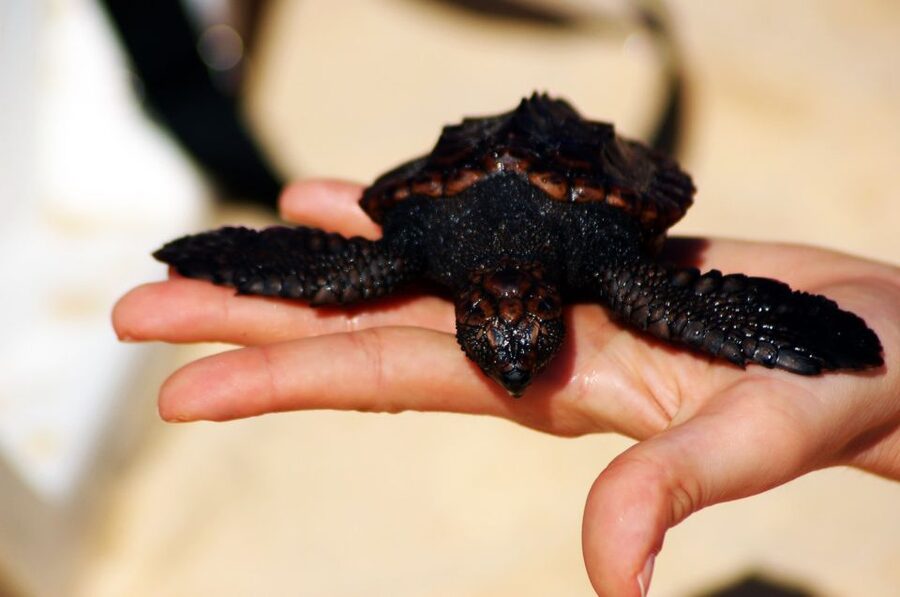
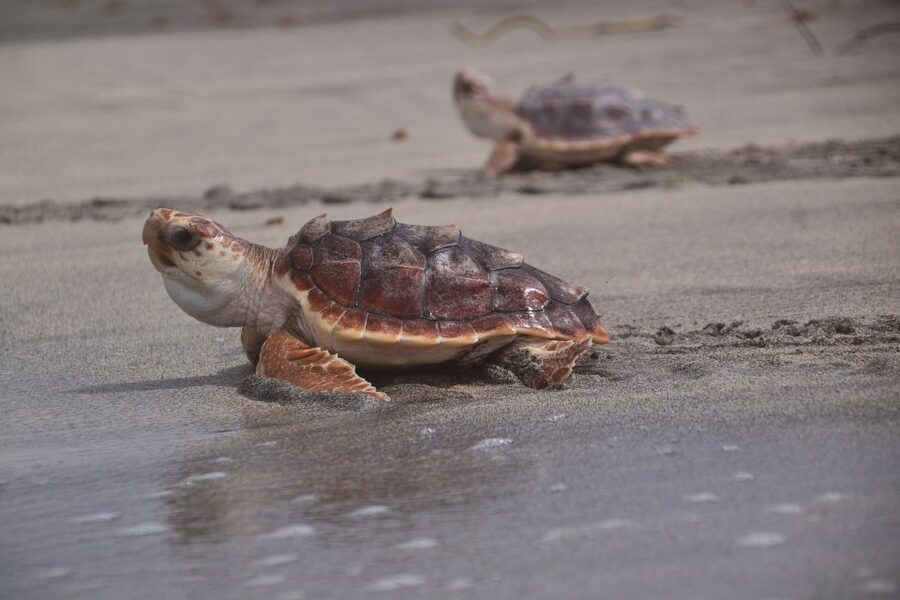
Some nights include several turtles. One evening can bring three or four animals ashore, while another may provide just one sighting. There have also been occasions when small turtles were seen hatching or lost hatchlings were helped back toward the sea. These moments are possible, not promised.
You may notice other groups on the beach. One account describes some parties as more intrusive than this tour, which makes it even more important to stay with your guide and follow the quieter viewing method. If another group creates noise or uses bright lights, the experience can become less peaceful for everyone.
Is $41 good value?
At $41 per person, this is a fairly priced specialist outing if seeing wild turtles is high on your Sal wish list. Your fee covers hotel pickup and return, transport, the guide, the beach outing, and infrared lighting. You do not need to arrange a taxi to a remote beach or find the nesting area yourself.
The value also comes from the access and timing. Sea turtles come ashore at night, often far from the main resort area, and the guides know how to search for them without turning the beach into a noisy hunt. You are paying for local coordination, transport, and a controlled observation, not only for the minutes spent looking at a turtle.
Still, $41 does not buy certainty. The advertised 99 percent success rate over five years is encouraging, but no wildlife tour can guarantee an animal’s behavior. You may see a turtle without seeing her lay eggs, or you may watch the full nesting cycle. You might wait a long time and see less than hoped.
For me, the price makes sense if you value a careful wildlife encounter and are willing to accept nature’s uncertainty. If you need a guaranteed show, bright photographs, or a tightly timed evening, spend the money elsewhere.
What to wear and bring
Follow the clothing advice closely. Choose dark colors from head to toe if possible, and wear shoes that can handle loose sand. A light jacket is useful because the tour takes place at night, and one account also recommends mosquito repellent.
The official packing advice is short: comfortable shoes. In practice, dark clothing and a jacket are just as useful. Avoid bringing a flashlight, since personal flashlights are not allowed. Your phone should remain away during the observation because video recording is prohibited.
You do not need specialist equipment. The tour provides infrared lighting, and the guide controls the viewing setup. The best souvenir may be the memory rather than a photograph.
Who will enjoy this most?
This is a strong choice for adults, couples, older children who can stay quiet, and anyone interested in wildlife conservation. It also suits people who enjoy learning from guides and can sit patiently while nature takes its time.
It is not suitable for children under three, wheelchair users, or people with mobility impairments. The walk on sand and the darkness make the outing difficult for anyone who is unsteady on their feet. It is also not recommended if you have a fear of the dark.
The silence requirement may be hard for very young children. Even older children need to understand that they cannot rush toward the turtle, use a phone light, or talk loudly when the animal arrives.
You must not join if you are under the influence of alcohol. That rule is sensible, since the beach is dark and the animal welfare instructions require careful behavior.
Timing, transport, and group feel
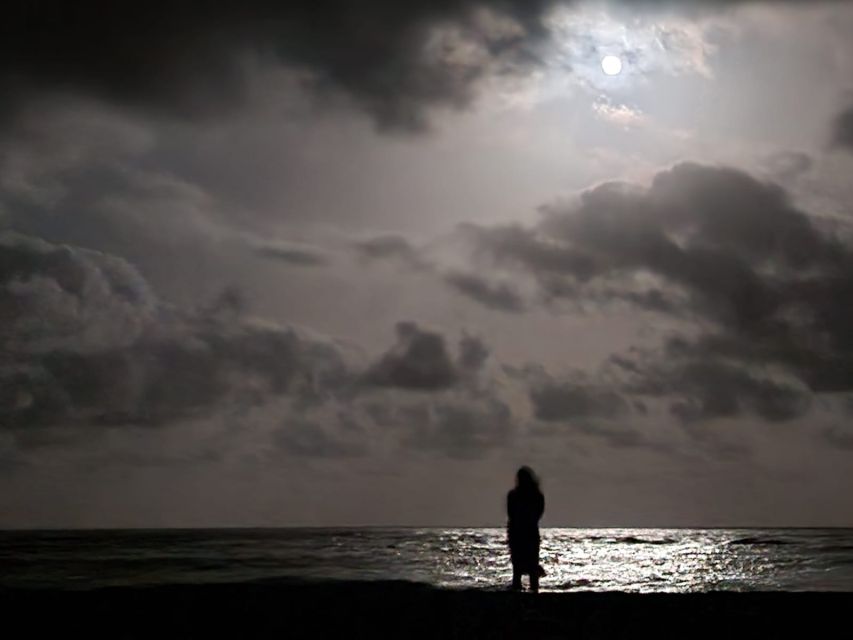
Hotel pickup and drop-off simplify the evening. The vehicle is air-conditioned, and the guide begins explaining the activity during the ride. That early briefing helps you understand why the group may stop, wait, or change position once it reaches the beach.
The exact schedule is variable because of updated Ministry of the Environment guidelines. Pickup may occur between 7:30 PM and 10:30 PM, and the transport time is confirmed on the morning of the activity. The return is generally around 10 or 11 PM, but a longer wait could push the evening later.
The group can be fairly large at the start, with around 20 people in some cases. Guides split people into smaller units for the actual turtle observation. If you prefer a private or very small wildlife outing, check the group arrangement before booking because the available information does not promise a private tour.
That said, the smaller viewing groups help. They make it easier to hear the explanation and reduce pressure on the nesting turtle. The quality of the night depends less on luxury and more on how well everyone follows the rules.
Booking advice for your Sal holiday
Book this on a night when you can remain flexible. Do not schedule it before an important flight, a late dinner reservation, or anything that depends on returning at a precise hour. The flexible timing is part of the current operating rules.
You can reserve now and pay later, which helps if you are arranging several activities on Sal. Cancellation is free up to 24 hours in advance, according to the stated terms. Confirm the pickup details on the morning of the tour and keep your phone available for that message.
I would choose this early enough in your holiday that you still have another chance to adjust plans if weather or timing causes trouble. If you are on Sal only briefly, it is still worth considering, but accept that a wildlife outing should not be treated like a fixed theater performance.
Should you book the Sal turtle watch?
Book it if you want one of Sal’s most unusual evening activities and can be patient, quiet, and comfortable on sand. The best version of this tour lets you watch a female turtle lay eggs, cover her nest, and return to the sea while a trained guide explains the process without interrupting it.
The strongest reasons to go are the careful guide work, the infrared lighting, the small viewing groups, and the chance to see the full nesting routine. Nany, Dani, and Chan are all associated with especially clear and friendly guiding, though your assigned guide may vary.
Skip it if darkness, long waits, limited mobility, or strict no-photo rules will make the evening unpleasant. For everyone else, $41 buys a thoughtful wildlife outing and a real chance to witness something few beach holidays can offer.
FAQ
Where does the sea turtle tour take place?
The tour leaves from Santa Maria on Sal Island and travels to a quiet, often deserted beach where nesting turtles come ashore.
What time does the activity start?
Pickup is commonly around 8 PM, but current rules allow the activity to take place between 7:30 PM and 10:30 PM. The exact transport schedule is confirmed on the morning of the tour.
How long does the tour last?
Return to your accommodation is generally around 10 or 11 PM. Waiting time can vary, and you may need to remain on the beach for up to two hours or more if a turtle has not yet appeared.
Is seeing a turtle guaranteed?
No. Nesting depends on environmental factors. The stated success rate has been 99 percent over the past five years, but sightings and the full egg-laying process are not guaranteed.
Which turtle species might I see?
Cape Verde is home to three turtle species. The common turtle, also called the yellow turtle, is the species most often associated with nesting on Sal’s sandy beaches.
Can I take photographs or record video?
No. Flash photography, video recording, and personal flashlights are not allowed. Infrared lighting is provided for the observation.
What should I wear?
Wear dark-colored clothes such as black, dark brown, dark blue, or dark gray. Choose comfortable shoes for walking on sand, and consider bringing a light jacket and mosquito repellent.
Is the tour suitable for children?
It is not suitable for children under three years old. Older children must be able to walk on sand, remain quiet, and cope with darkness and waiting.
Is the tour accessible for wheelchair users?
No. The activity is not suitable for wheelchair users or people with mobility impairments because it involves walking on sand in the dark.
Which languages are available?
The tour is offered in English, Portuguese, Spanish, and French. Guides may include Nany, Dani, or Chan, depending on the departure.
Just added around Sal
- Facial treatment★ 5.0 · 3 reviews
- Sal Island All-inclusive Adults-only Catamaran Cruise★ 5.0 · 3 reviews
- Sal: Small Group Island Tour & Lunch with a Local Family★ 4.4 · 3 reviews
- Sal: Romantic Sunset Escape with Wine and Roundtrip Transfer★ 4.3 · 3 reviews
- 4×4 Off Road Full-Day Private Tour – Sal Island Hidden Secrets★ 5.0 · 3 reviews
- Sal island: Guided Historical and Cultural Tour★ 4.4 · 3 reviews
- First Diving Experience Try Dive★ 4.5 · 3 reviews
- Salt Pans & Lemon Sharks Experience★ 4.6 · 3 reviews
Sal Tours, compared.
Sal: Island Experience Tour with a Certified Local Guide
Read our review →
All-Inclusive Salt Lake, Blue Eye and Shark Bay Tour
Read our review →
Experience on Sal Island with native and certified guide (including sharks)
Read our review →
Complete Excursion and Flight on the Zipline Cabo Verde
Read our review →

Sal: All-Inclusive Half-Day Lounge Catamaran Cruise
Read our review →Browse the lists this tour appears in