
Reviewed · BOA VISTA TOURS
Boa Vista: 3h Turtle Watching Expedition
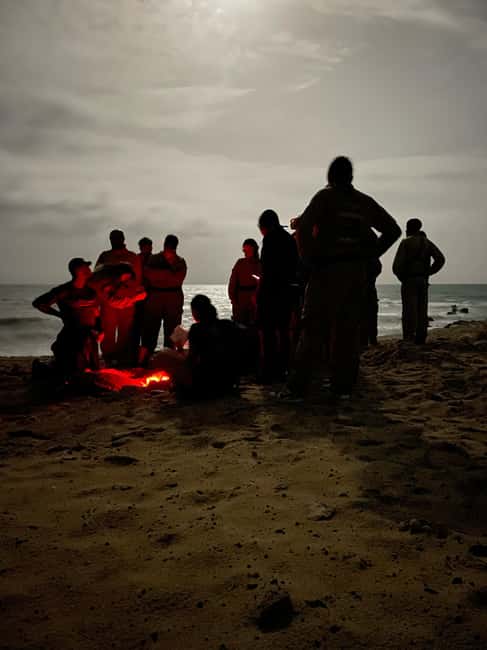
Pesqueiro Grande is one of Boa Vista’s key nesting beaches for Caretta Caretta turtles, and this three-hour outing gives you a rare look at them after dark. You may watch a turtle camouflage her nest, return to the sea, or, with luck, see a hatchling begin its first journey.
I like the hotel pickup and drop-off, which keeps the evening simple, and I like the strong focus on quiet, careful wildlife watching. Guides such as Josiel have been praised for clear instructions and close attention to detail. The main concern is group control: a large departure can mean jeep transfers, long waits, and much less turtle-watching time than expected.
Key points to know before you book
- Pesqueiro Grande is the main setting: You visit one of Boa Vista’s best beaches for nesting Caretta Caretta turtles.
- The animals set the schedule: Sightings are likely, but no turtle appearance can be promised.
- The outing takes place in darkness: Wear dark clothing, bring closed-toe shoes, and expect to walk across loose sand.
- A quiet group matters: Smaller groups should make transfers and movement between sighting spots easier.
- The best moments can be brief: A turtle may lay eggs, change her mind, return to the ocean, or appear only for a short time.
- The $76 price includes the basics: Transport, guiding, and equipment are covered, but food and drinks are not.
Watching turtles at Pesqueiro Grande after dark
The heart of the outing is a visit to Pesqueiro Grande, a broad beach used by Caretta Caretta turtles for nesting. You are not heading to an aquarium or a fenced viewing area. The point is to see the turtles in their own setting, with as little disturbance as possible.
That also means this is not a show with a fixed start time. A turtle might be resting at sea, moving up the beach, preparing a nest, or deciding that conditions are not right and heading back. You need to accept a little uncertainty, because that is part of watching wild animals rather than trained ones.
The most memorable possibility is seeing a female crawl above the tide line, dig, lay her eggs, cover the nest, and make her way back toward the ocean. A more unusual sight can happen too. One account describes a hatchling appearing on its own, with the group helping guide it toward the sea under supervision. Moments like this are short, quiet, and far more moving than a staged encounter.
More Turtle Watching in Boa Vista
- Boa Vista: Shark, Turtles, Cave, Sandboarding & Tasting Tour
★ 4.8 · 328 reviews - Boavista: Turtle, Shark, Santa Monica, Sandboard & Tasting
★ 4.7 · 228 reviews - Boa Vista: Beautiful Beaches, Turtles & Djeu Island Snorkel
★ 4.6 · 100 reviews
The hotel pickup and transfer
The evening begins with pickup at your hotel in Boa Vista. This is useful because you do not need to arrange your own route to a remote beach or work out how to return after dark. During the transfer, your guide explains the turtles, the nesting process, and the rules for the visit.
Pay close attention to this briefing. It is not filler before the main event. The way you behave can affect whether a turtle continues toward her nest, abandons it, or returns to the sea. You will be asked to keep your distance, avoid sudden disturbance, follow the guide, and never use flash photography.
Transport arrangements can vary in practice. One outing involved a change from a minibus to a nine-seat jeep after reaching the sand. That transfer is not necessarily a problem, but it becomes frustrating when the group is too large for one vehicle. In that case, several runs may be needed between the vehicle and turtle sighting spots.
This is the biggest practical weakness to keep in mind. A tour advertised as three hours may take closer to five hours from pickup to drop-off if there are delays. One reported schedule ran from about 7:20 p.m. until 12:15 a.m., with only around 30 minutes spent directly watching a turtle. The wildlife itself was worthwhile, but the waiting was not.
What the turtle briefing teaches you
Caretta Caretta turtles return to beaches to lay their eggs, but the nesting process is easily disturbed. Bright light, noise, movement, and people crowding the animal can make it stop or turn back.
You will be told to wear dark clothing because pale or bright clothes can be more visible in the darkness. Flash photography is not allowed. Leave the camera flash switched off and let your guide decide when and where it is safe to take photographs.
The guide also explains how to move along the beach without causing trouble. You may need to wait quietly while a turtle completes part of the nesting process. If the animal changes direction, you should not chase it or try to force a better view.
I like this part of the tour because it gives the sighting a purpose. You are not simply looking at an animal for a few minutes. You are learning how a protected nesting beach works and why restraint matters.
Walking across the sand in the dark
You should be ready for a real walk, not a short stroll from a vehicle to a viewing platform. The beach is sandy, the conditions can be uneven, and you may move between possible sighting spots.
Closed-toe shoes are required, and comfortable clothing is a smart choice. Sand is harder work than a paved path, especially at night when you cannot see every change underfoot. The conditions may feel tiring if you are not used to walking on loose sand.
Mosquitoes have also been reported as a nuisance during the walk. Bring only what you can carry easily, keep your clothing practical, and expect the beach to feel very different from a daytime seaside visit. The darkness is part of the appeal, but it also makes every transfer and pause feel longer.
The guide should be your reference point throughout. Stay with the group, listen for instructions, and avoid wandering off to search for a turtle independently. The animals need space, and the beach is not the place to improvise.
Same island, a completely different day out:
- Boa Vista: Santa Monica, Dunes, Caves and Village 4×4 Tour
★ 4.8 · 137 reviews - Boa Vista Jeep Expedition: Shipwreck & Viana Desert (4-Hour)
★ 4.9 · 134 reviews - Boa Vista Quad Tour: Shipwreck & Viana Desert (2-Hour)
★ 4.9 · 121 reviews - Boa Vista: Whale Watching Trip with Motoryacht
★ 4.3 · 115 reviews
How much turtle time will you get?
The tour is described as three hours, but the full evening can run longer. Pickup delays, vehicle changes, walking time, and movement between sighting spots all affect how much time you actually spend watching turtles.
A well-managed group can make good use of the evening. Drivers and guides have been praised for staying cheerful late at night, giving clear directions, and finding turtles without long delays. Josiel, in particular, has been singled out for careful guiding and attention to detail.
Group size makes a major difference. If everyone fits into one jeep, the outing should involve less waiting and fewer repeated transfers. If more than 20 people are combined, the vehicle may need several trips, leaving some people standing around while others move to a sighting area.
This is why I would ask about the expected group size before booking if the operator can provide that information. The wildlife cannot be controlled, but the transport plan can be. A smaller group is likely to give you more time on the beach and less time waiting beside a vehicle.
The best possible turtle encounter
There are several different outcomes, and each has its own value. You might see a turtle carefully cover her nest with sand, a process that can look almost deliberate and secretive. You might watch one come ashore, pause, then change her mind and return to the ocean.
A turtle that changes her mind is not a failed sighting. It shows how cautious the animal is and why the group must remain still and quiet. Still, if you have paid $76, you may understandably hope for more than a brief glimpse.
The ideal outing includes several turtles or a longer nesting sequence. A clear night can add another layer to the experience, with stars above the beach and the ocean beyond. The setting is simple, but the combination of darkness, silence, and a wild turtle moving across the sand can feel extraordinary.
There is also a chance of seeing a hatchling. This is not guaranteed, and you should not book the tour expecting one. If it happens, listen closely to the guide. Hatchlings are vulnerable, and the right response is calm, limited assistance rather than a crowd gathering around them.
Guide quality and the value of good instructions
The strongest part of the operation appears to be the people on the ground. Drivers and guides have been praised for being friendly, prepared, and good-humored despite the late hour. Clear directions matter here because darkness, sand, and wildlife rules leave little room for confusion.
The guide’s job is not only to find turtles. It is also to control the group, protect the animals from lights and noise, and explain what you are seeing. When that works, the outing feels respectful rather than intrusive.
Josiel is a name worth noting if you are able to request or identify your guide, since his careful approach has received particularly warm praise. The available information does not promise that he leads every departure, so treat him as an example of the standard you hope to receive, not a guaranteed assignment.
Is $76 a fair price?
At $76 per person, the cost is reasonable if you value the convenience of transport and the chance to see nesting turtles without arranging the outing yourself. Hotel pickup and drop-off, a guide, and necessary equipment are included.
The value depends heavily on how the evening is managed. If you receive a smooth transfer, useful natural history, and a good period watching turtles, the price feels fair for a specialist wildlife outing. If a large group creates repeated jeep trips and hours of waiting, the same price feels harder to justify.
Food and drinks are not included, so eat before pickup and carry anything allowed by the operator. The provided information does not list refreshments as part of the service.
You can reserve now and pay later, which helps if your plans are still shifting. Cancellation is free up to 24 hours before the outing. The tour is not suitable for children under six.
Who should book this Boa Vista turtle tour?
I would recommend it to adults and older children who care more about a genuine wildlife encounter than a guaranteed photo. It suits people who can walk on sand, remain patient in darkness, and accept that nature may provide a short sighting rather than a full performance.
It is also a good fit if you want an organized evening with hotel transport. You avoid the challenge of finding Pesqueiro Grande yourself and receive direct guidance on how to behave around nesting turtles.
I would hesitate if you dislike waiting, struggle with loose sand, or need a tightly timed three-hour activity. I would also ask about group size before paying, especially after the report of a crowded departure with more than 20 people and only about 30 minutes of direct turtle viewing.
Should you book the Pesqueiro Grande outing?
Book it if watching a wild Caretta Caretta turtle in its nesting habitat is high on your Boa Vista list. The chance to see a turtle build or cover a nest, return to the ocean, or encounter a hatchling is special, and the conservation briefing adds real value.
Go in with the right expectations. Sightings are likely, not guaranteed. The tour can involve darkness, sand, mosquitoes, vehicle changes, and waiting. If possible, confirm the pickup details and expected group size before booking.
For the best chance of a rewarding evening, wear dark clothes, closed-toe shoes, and comfortable layers. Keep your phone light off, never use flash, follow the guide closely, and let the turtles set the pace. If you can accept those limits, this is one of Boa Vista’s more meaningful nighttime activities.
FAQ
Where does the turtle-watching tour take place?
The tour visits Pesqueiro Grande beach on Boa Vista Island, one of the island’s best nesting beaches for Caretta Caretta turtles.
How long is the turtle-watching experience?
The activity is described as a three-hour expedition, though the total evening can take longer because of pickup, transfers, walking, and waiting between sighting spots.
Are turtle sightings guaranteed?
No. Sightings are likely, but turtles are wild animals and an appearance cannot be guaranteed.
What should I wear and bring?
Wear comfortable clothes, dark clothing, and closed-toe shoes. Be prepared to walk on sand. Food and drinks are not included.
Can I use flash photography?
No. Flash photography is not allowed because bright light can disturb the turtles.
Is the tour suitable for young children?
The tour is not suitable for children under six years old.
More 3-Hour Experiences in Boa Vista
- 3-hour Catamaran Adventure on the waters of Sal Island
★ 4.7 · 349 reviews - 3-Hour Shark Bay and Salt Lakes in Sal Island Guided Tour
★ 4.5 · 19 reviews - Half-Day Sailing Yacht Adventure in Sal Island – 3 hours
★ 4.5 · 14 reviews - 3 Hours Yacht Sailing Activity in Cabo Verde, Santa Maria
★ 5.0 · 9 reviews
Just added around Boa Vista
- Boavista: City Tour with a Splash at Estoril Beach★ 4.2 · 3 reviews
- Boa Vista: Snorkeling at Gatas Bay & North East Tour★ 4.3 · 3 reviews
- Discover Scuba Diving Program for Beginners★ 4.2 · 4 reviews
- Exciting Buggy Adventure under the Stars in Boa Vista★ 5.0 · 4 reviews
- Full Day South to Southwest Exploration in Boa Vista Island★ 5.0 · 4 reviews
- Boa Vista: Guided Turtle Experience with a Certified Guide★ 4.0 · 4 reviews
- Guided Full Day Island Tour in Boa Vista with Lunch★ 5.0 · 4 reviews
- Boa Vista: African night★ 3.4 · 4 reviews
Boa Vista Tours, compared.

Boa Vista: Shark, Turtles, Cave, Sandboarding & Tasting Tour
Read our review →
Turtle, Shark, Santa Monica, Sandboard & Tasting
Read our review →
Santa Monica, Dunes, Caves and Village 4×4 Tour
Read our review →
Boa Vista Jeep Expedition: Shipwreck & Viana Desert (4-Hour)
Read our review →
Browse the lists this tour appears in