
Reviewed · SANTIAGO TOURS
Hiking: Monte Tchota Natural Park – Pico D’Antónia (1394m) – Longueira
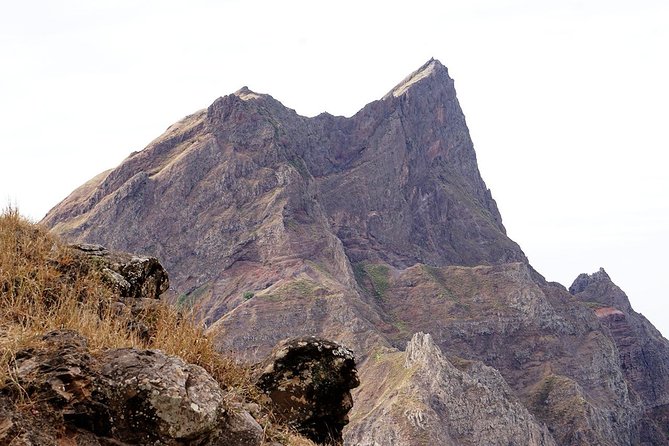
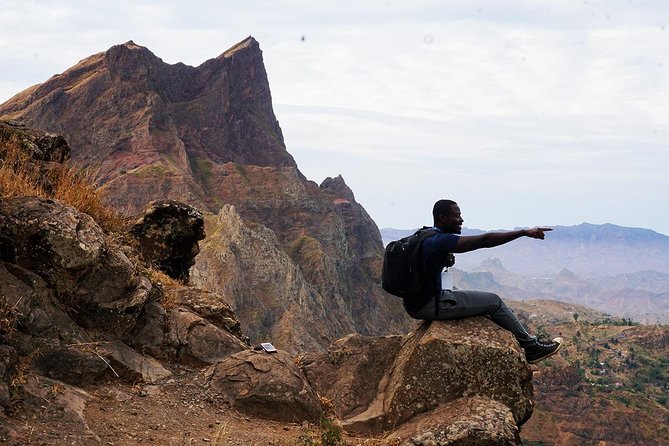
Pico D’Antónia gives you Santiago Island at its most rewarding: a hard climb, a mountain picnic, and a descent through farms and homes built into the Longueira mountains. I like the small maximum group of eight, and I like that local guides such as Cátia and Nilton bring the island’s daily life into the day, not just its scenery.
The main catch is the route itself. This is a difficult, one-way hike of about 9 kilometers, with narrow, sloping paths, steep rocks, and a short section requiring level 1 climbing. You need solid fitness, proper shoes, water, and a willingness to work for the views.
Key points to know before booking
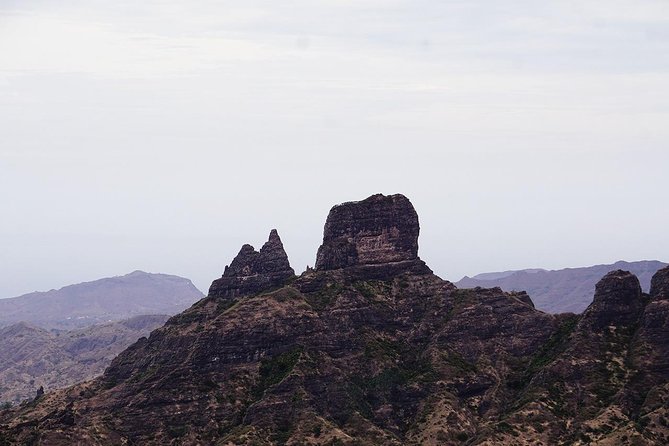
- Pico D’Antónia reaches 1,394 meters, the highest point on Santiago Island.
- The route covers about 9 kilometers and takes roughly four to five hours of walking within a six-hour outing.
- A picnic lunch is served near the summit, weather permitting.
- The descent passes corn, mango, coffee, or tomato fields, depending on the season.
- Longueira adds a human side to the hike, with local homes and a visit to a family.
- Groups are limited to eight people, with hotel pickup and drop-off from Praia.
Why this hike is special on Santiago Island
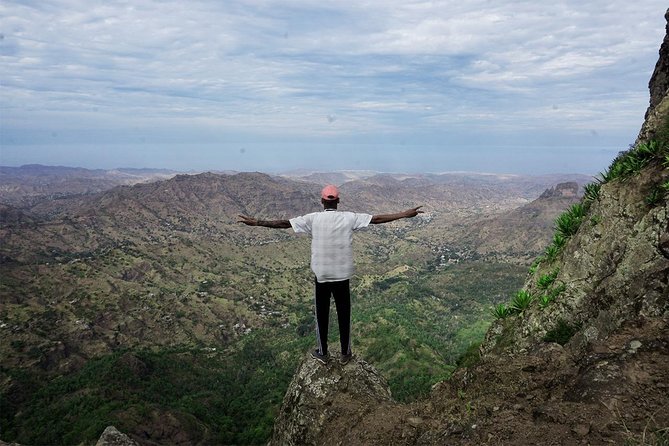
Many mountain trips give you a summit and little else. This one links several parts of Santiago in a single day: protected plant life, high mountain views, agriculture, and family life in Longueira. The route does not simply take you up and back down the same trail.
You begin near Monte Tchota Natural Park and walk through an area described as unspoiled. The surroundings support endemic plants and birds, so the climb has more to offer than a fitness challenge. Your guide can point out what belongs to Santiago and explain how the mountain environment changes as you gain height.
The summit is Pico D’Antónia, at about 1,394 meters. It is commonly rounded to 1,400 meters, but the more exact figure matters if you are comparing hikes. This is the highest point on Santiago Island, making the climb a clear goal rather than an open-ended walk.
I especially like the way the experience connects the high point with Longueira below. After the summit, you descend through agricultural land and reach homes carved into the mountainside. That transition gives you a more useful picture of rural Santiago than a viewpoint alone.
More Hiking Tours in Santiago
- Serra Malagueta: Principal Valley Hike & Lunch with Locals
★ 4.7 · 64 reviews - Praia: Baobab Mysterious Tree, Green Valley & Old City Hike
★ 4.8 · 53 reviews - Santiago: Calabaceira Valley Trek & Visit to Cidade Velha
★ 4.8 · 49 reviews
From Praia to Monte Tchota
Pickup begins in Praia at 8:30 a.m. The drive from your hotel is part of the opening transfer, with the return journey included at the end of the day. Since the activity lasts about six hours, you should expect to spend most of the morning and early afternoon away from your hotel.
A small group makes a real difference on a demanding trail. With no more than eight people, the guide can keep an eye on pace and footing more easily than on a large coach excursion. Cátia is identified as a guide, and Nilton as the driver. Their role is not just transport and trail direction. They can answer questions about the country and offer practical recommendations for the rest of your time in Cape Verde.
I would use the drive to ask about the day’s conditions, the steep sections, and the view from the top. The weather matters here. Clouds can limit the panorama, including the chance to see nearby Fogo Island and its volcano on the horizon.
The climb to Pico D’Antónia
The walking section reaches about 4.2 kilometers on the way toward the walking point of Pico D’Antónia. The full route is listed at roughly 9 kilometers because the descent continues through Longueira rather than returning along the same path.
The numbers tell you what kind of outing this is. The route has an elevation gain of about 660 meters and an elevation loss of roughly 1,280 meters. The minimum elevation is around 485 meters, while the highest point is close to 1,400 meters. Much of the effort comes on the ascent, but do not underestimate the descent. Descending steep rocks can be hard on knees and ankles, especially after your legs have already worked for several hours.
The path is described as narrow and sloping. In one section, you may need to use your hands for level 1 climbing. That does not make this a technical climbing trip, but it does mean you should not book it as a casual stroll. Hiking shoes with good grip are strongly recommended. Walking sticks can also help on both the uphill and downhill sections.
The guide’s pacing is one of the most useful parts of a small-group hike. Cátia and Nilton received strong praise for keeping a steady pace, allowing regular rests, and helping people feel safe. That does not remove the physical demand, but it gives you a better chance to handle it sensibly.
Bring water, a hat, and sunscreen. Hiking pants are especially recommended from August through October. Wear clothes that let you move freely and that you do not mind getting dusty or scuffed on rock.
Summit views and a well-earned picnic
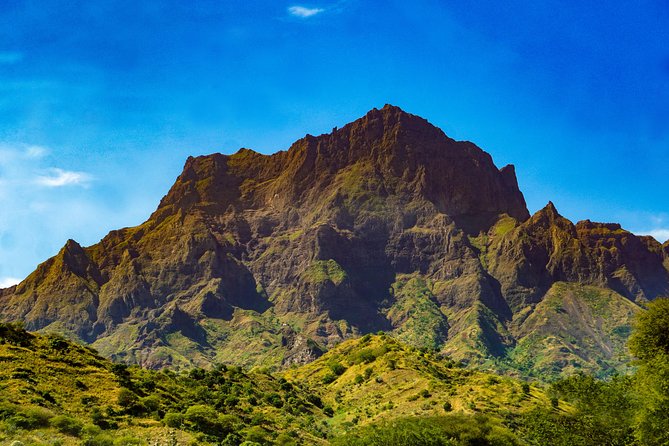
At the top, you stop for a picnic lunch. This is a smart part of the design. You get time to rest, eat, and enjoy the high point instead of rushing through it for a quick photo.
The panoramic view depends on the weather. On a clear day, you may see across Santiago and, if conditions cooperate, spot Fogo Island with its volcano far away on the horizon. Clouds can hide that view, so keep your expectations flexible. The summit remains the main physical achievement even when the sky is not perfectly clear.
I like that the picnic turns the summit into a proper pause. Bring your own water even though lunch is provided, since the supplied details do not specify how much drinking water is included. A hat and sunscreen matter at high, exposed points, while a light layer may be useful if conditions change.
The best photographs will likely come from more than the summit itself. Watch for changing views on the approach, then save some attention for the descent, when the route shifts from high mountain terrain to cultivated slopes.
More Hiking Tours in Praia:
- Santiago: Monte Tchota Natural Park to Pico d’Antónia Hike
★ 4.8 · 43 reviews - Serra Malagueta Natural Park Hike & Relaxing Swim at Tarrafal Beach
★ 5.0 · 30 reviews - Serra Malagueta Natural Park: Hike to Gongon Valley & Lunch
★ 4.8 · 22 reviews - Santiago Island: 4-Hour Calabaceira Valley Hike & Guided Tour to Cidade Velha
★ 5.0 · 18 reviews
Descending through Santiago’s farm country
After lunch, the hike goes down steep rocks and through agricultural fields. The crops vary by season, with corn, mango, coffee, and tomatoes named as possible sights.
This is where the tour gains much of its local character. You are not looking at agriculture from a roadside window. You are walking among the fields and seeing how mountain communities use the available ground. What you find will depend on the time of year, so no single crop is guaranteed.
The descent also changes the pace of the day. The summit section is about effort and height. The lower route gives you more time to notice cultivation, paths, and the relationship between homes and mountain terrain. It is still physically demanding, but the focus shifts from reaching the top to understanding the area you are passing through.
Take care on this part. A downhill trail can feel easier at first, but narrow footing and loose or uneven rock require concentration. Walking sticks are useful here, and you should not rush simply because the highest point is behind you.
Longueira homes and a family visit
The final walking section leads among local houses carved into the Longueira mountains. You then visit a local family and hear about daily life and culture in the region.
This encounter is a valuable counterpoint to the summit. Pico D’Antónia tells you about Santiago’s height and natural setting. Longueira shows you how people live within that setting. The visit is not a staged sightseeing stop described in broad terms. It is a chance to listen to a family explain its own routine and surroundings.
Keep your approach respectful. You are entering a lived-in community, not an open-air museum. Follow your guide’s lead about photographs and conversation. If you want to ask questions, focus on daily life, farming, the houses, and seasonal work rather than treating the visit as a quick photo opportunity.
For me, this is the part that makes the tour more meaningful than a summit transfer. You get both a physical sense of the island and a small window into local life.
Price, group size, and overall value
The price is $98.72 per person. That is not the lowest-cost way to see Santiago, but the value depends on what you want from the day. The fee covers a guided mountain outing with hotel pickup and drop-off, a picnic lunch, a local family visit, and a small group capped at eight people.
The small group is important. A difficult route is easier to manage when the guide can keep the pace together and respond to individual needs. The local guide and driver also add context that you would miss by arranging a simple transfer to the trailhead.
The tour is booked on average 27 days in advance, so it is sensible to reserve early if the date matters to you. The activity can also be canceled if poor weather makes the route unsuitable or if the minimum number of participants is not reached. In either case, you are offered another date or experience, or a full refund.
You can cancel for a full refund up to 24 hours before the start time. Changes or cancellations made inside that window are not refunded, so check your plans before the cutoff.
Who should book this experience
This hike suits you if you enjoy a serious day outdoors and want more than a viewpoint near Praia. You should have a strong fitness level, no health problems that could make steep walking unsafe, and comfort with narrow trails and a short hands-on climbing section.
It is suitable for walkers with some fitness, but the stated difficulty is difficult. Do not read the six-hour duration and assume the hike is moderate. Four to five hours are spent walking, with substantial height gain and loss.
The activity is for people over 16. It is not a good choice if you want a gentle nature walk, have limited mobility, dislike steep descents, or prefer a fixed schedule with little physical strain.
It is particularly well suited to you if:
- You want the highest point on Santiago Island as a clear goal.
- You enjoy learning about endemic plants, birds, and farming.
- You prefer a small group to a large sightseeing vehicle.
- You want to meet a local family rather than only take photographs.
- You have another part of your holiday set aside for rest after the hike.
The final point matters. The tour’s own advice is practical: complete this demanding outing, then spend the rest of your holiday relaxing. Do not place it after several exhausting activity days if you can avoid it.
What to pack for the 8:30 a.m. start
Wear sturdy hiking shoes. Trainers may not give you enough grip on narrow, sloping paths and steep rock.
Bring:
- Plenty of water
- A hat
- Sunscreen
- Hiking pants, especially from August through October
- Walking sticks if you use them
- Comfortable clothing for four to five hours of walking
A mobile ticket is offered, and booking confirmation is received at the time of reservation. Pickup is available from your hotel in Praia, so confirm the pickup details when you book.
Should you book the Pico D’Antónia hike?
Book it if you want Santiago’s highest summit, a picnic with wide views, and a route that continues into farm country and Longueira. The guide support, small group, and local family visit give the day more substance than a simple mountain walk.
Skip it if you are looking for an easy excursion. The route is difficult, narrow, and steep, with about 660 meters of ascent and a much longer total descent. For fit walkers who prepare properly, the $98.72 price offers a full day of scenery, exercise, local knowledge, and human contact in one outing.
FAQ
How long does the Monte Tchota and Pico D’Antónia experience last?
The full activity takes about six hours, including hotel pickup, the hike, and hotel drop-off. The walking portion takes roughly four to five hours.
How far is the walking route?
The total walking distance is about 9 kilometers. The route is one way, with the hike ending through the Longueira area rather than returning by the same trail.
How difficult is the hike?
The route is rated difficult. It includes about 660 meters of elevation gain, roughly 1,280 meters of elevation loss, narrow and sloping paths, steep rocks, and a section where level 1 climbing may be needed.
What should I bring?
Bring hiking shoes, water, a hat, sunscreen, and walking sticks if possible. Hiking pants are highly recommended from August through October.
Is the hike suitable for everyone?
The activity is intended for walkers with some fitness and no health problems. A strong physical fitness level is recommended, and the activity is for people over 16 years old.
What happens if the weather is poor?
The activity requires good weather. If it is canceled because of poor conditions, you are offered a different date or experience, or a full refund.
Just added around Praia
- Praia: Plateau and Cidade Velha Guided Tour★ 5.0 · 3 reviews
- Praia City Tours★ 3.4 · 3 reviews
- Best of Santiago Island: Cidade Velha, Workshop & Tarrafal Beach Tour★ 4.5 · 3 reviews
- Cape Verde: Best Hikking Trails of Santiago Island – 6 Days★ 5.0 · 3 reviews
- From Praia: Full-Day Guided Fogo Island Tour★ 4.2 · 3 reviews
- Tarrafal Bay Boat Trip and Beach Day★ 4.4 · 3 reviews
- Hiking Águas Belas Cave★ 4.5 · 3 reviews
- Santiago Island: Private Airport Transfer to Praia or Vice Versa★ 5.0 · 3 reviews
Santiago Tours, compared.
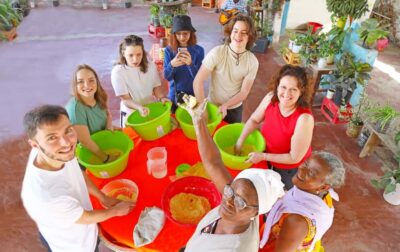
Santiago Island Tour with Tastings and Tarrafal Beach
Read our review →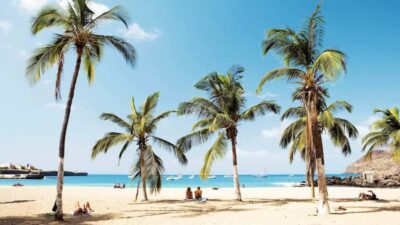
Santiago: Landscapes, Street Art, and Markets Day Trip
Read our review →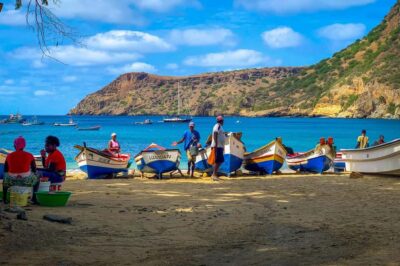
From Port of Praia: Island Tour for Cruise Ship passengers
Read our review →
Santiago Island Tour: Meet with a Local Family & Tarrafal Beach
Read our review →
Island tour with German-speaking guide for cruise guests
Read our review →
From Praia: Banana Plantation Tour and Cuscuz Workshop
Read our review →
Santiago Island: Highlights of Cidade Velha with Local Guide
Read our review →Browse the lists this tour appears in