
Reviewed · SANTIAGO TOURS
Tour Old City/Discover Old Town
Cidade Velha is where Cape Verde’s story becomes easiest to grasp. The former Ribeira Grande was Portugal’s first city in Africa and an early center for Atlantic trade, shipping, religion, and slavery. This private tour takes you from Praia to its surviving monuments, including Fort São Filipe and the old cathedral ruins.
I like the private transport and the compact route. You get a driver for your own group, and the stops cover both grand ruins and uncomfortable truths, especially the pillory tied to public punishment during the slave era. Driver Nelson has been praised for his warmth, humor, pacing, and lunch advice. The main caution is clarity: the listed visit lasts about two to three hours, and one booking party expected five hours and finished in about two and a half.
Key points to know before booking
- Cidade Velha was Cape Verde’s first capital: The old Ribeira Grande was founded during Portugal’s Atlantic expansion and became a major center on Santiago.
- Fort São Filipe gives you the broadest setting: The fort sits above the former city and connects the ruins below with attacks, defense, and Portuguese rule.
- The pillory requires a serious pause: This white marble column is not just an old monument. It is linked directly to municipal power and the punishment of enslaved people.
- The route mixes ruins with surviving buildings: The cathedral is largely ruined, while Nossa Senhora do Rosário remains one of the island’s oldest churches.
- Private transport is useful from Praia: You travel with only your own group, but confirm the vehicle size if comfort matters.
- Budget around $29.60 per person, plus fees: The price can be good for a private outing, though taxes and any admission charges are not included.
Why Cidade Velha matters to Cape Verde
I would choose this tour for context, not just sightseeing. Praia is Cape Verde’s modern capital, but Cidade Velha, on Santiago’s southern side, takes you to the place that helped shape the archipelago’s early links with Africa, Europe, the Americas, and the East.
The old city was once called Ribeira Grande. It became a commercial center because of its position in the Atlantic and its access to ships needing fresh supplies and water. In 1533, it received city status. That distinction mattered politically, even though some historians question how fully the settlement developed by European city standards.
The story is not comfortable. Ribeira Grande was tied to the slave trade, and its monuments reflect both religious ambition and colonial control. The pillory in the main square is the clearest example. It represented local authority, but it was also where enslaved people were publicly punished.
That mix is the reason I would not treat Cidade Velha as a simple collection of old stones. The ruins tell you about Portuguese expansion, Christianity, trade, warfare, and slavery in the same small area. A good guide should help connect those subjects without rushing past the difficult parts.
More City Tours in Santiago
- Praia & Cidade Velha: Guided City Tour
★ 4.8 · 80 reviews - Praia: Baobab Mysterious Tree, Green Valley & Old City Hike
★ 4.8 · 53 reviews - Private Tour Cidade Velha/Discover OLD CITY
★ 5.0 · 4 reviews
The drive from Praia and the private format
The tour includes private transportation and pickup is offered. That makes it a practical choice if you are staying in Praia and want a direct visit to Cidade Velha without arranging your own ride.
Your group travels alone rather than joining a large shared party. This can make the day easier to manage, especially if you want to ask questions or keep the visit moving at your own pace. It also means the vehicle matters more. One customer was placed with four people in a small sedan and found the arrangement uncomfortable, so I would confirm the car type before booking if you are a group of four.
The advertised visit lasts about two to three hours. The scheduled stops add up to roughly three hours: one hour at Fort São Filipe, then about 30 minutes at each of the cathedral, Nossa Senhora do Rosário, the pillory, and São Francisco Convent.
That timing is enough for an overview. It is not a slow archaeological study, and you should not book it expecting a full five-hour excursion unless the provider confirms extra time in advance. One party believed the tour would last about five hours, finished the planned route in 2.5 hours, and was then asked to pay more for additional activities. The lesson is simple: confirm the total duration and exactly what is included before you go.
Fort São Filipe and the view over the old city
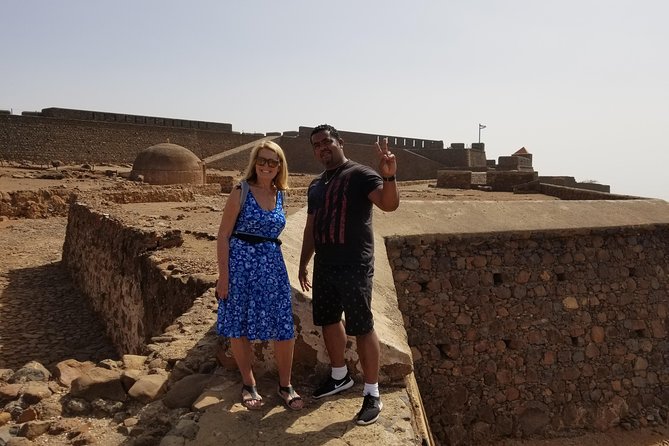
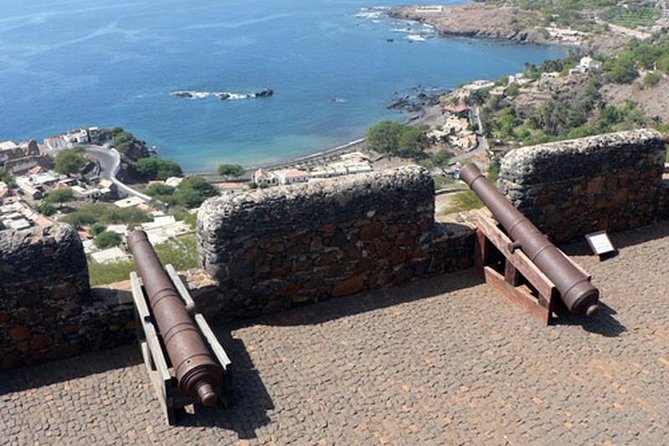
Fort São Filipe is the first major stop and receives about an hour, making it the longest visit of the day. It was built after Sir Francis Drake attacked the city in 1585. Construction began around 1593, and the fort helped protect and garrison Ribeira Grande.
This is the place to begin because it gives the old city a physical shape. From above, the former capital is easier to understand as a port settlement protected by high ground. The fort also gives you a sense of how exposed the city was to attack. Cape Verde’s Atlantic position brought trade and supplies, but it also placed the settlement on the route of privateers and rival powers.
I would take time here to look beyond the walls. The surviving ruins below lean toward the sea, and the open setting makes the passage of time hard to ignore. The site is more about scale and setting than polished interiors, so anyone expecting a complete fortress museum may find it spare.
The fort is also a good place to ask your driver or guide to explain the relationship between Portuguese control, local settlement, and maritime trade. That context is more useful than a list of dates. If Nelson is your driver, his warm manner and humor may help keep the history approachable, but the amount of detailed commentary can depend on the person leading your visit.
The ruined cathedral and the reach of the church
The Sé Cathedral receives around 30 minutes. It was the first cathedral the Portuguese built on the African continent, though much of the structure is now gone.
You will see a ruin being preserved rather than a functioning grand church. That condition is part of the point. The remaining walls show how much importance the Portuguese placed on Ribeira Grande, even as the settlement later declined and suffered damage.
The cathedral also helps explain why the city mattered beyond trade. Ribeira Grande was a religious center as well as a commercial one. Its location made it an early meeting point between different parts of the Atlantic world, and church institutions supported the colonial system operating around them.
Thirty minutes is enough for a short explanation and a close look at the remains. I would not expect a long interior visit or a full museum-style presentation. The appeal lies in seeing an early cathedral in Africa in its original setting, with the sea and ruins around it.
A few more Praia half-days to weigh up
- Santiago: Landscapes, Street Art, and Markets Day Trip
★ 4.8 · 316 reviews - From Port of Praia: Island Tour for Cruise Ship passengers
★ 4.5 · 190 reviews - Serra Malagueta: Principal Valley Hike & Lunch with Locals
★ 4.7 · 64 reviews - Santiago: Calabaceira Valley Trek & Visit to Cidade Velha
★ 4.8 · 49 reviews
Nossa Senhora do Rosário, one of Santiago’s oldest churches
The Church of Our Lady of the Rosary was built around 1495 and is one of the oldest temples on Santiago and in Cape Verde. It offers a useful contrast with the cathedral because it remains a recognizable church rather than a largely open ruin.
The church is linked to Father António Vieira, who preached there in 1652 while passing from Portugal to Brazil. He was surprised to find local clergy and canons with a level of learning he considered equal to the best in the Portuguese kingdom.
That detail gives this stop more texture than its half-hour timing might suggest. It pushes back against the idea that an early colonial outpost was only a rough military or trading station. Religious education and trained clergy were part of the city’s life.
I like this stop because it adds human scale to the grander story. Fort São Filipe explains defense, and the cathedral explains institutional ambition. Nossa Senhora do Rosário brings you into a place of worship with a specific connection to a notable preacher and the intellectual life of the settlement.
The Pelourinho and the hard truth in the main square
The Pelourinho, or pillory, is one of the most important stops, even though it takes only about 30 minutes. It is a white marble column in the main square, built in the Manueline style around 1512 or 1520 and restored in the late 1960s.
At first glance, it may look like a decorative civic monument. It was not. The column symbolized municipal authority, and it was also where enslaved people were publicly punished.
I would slow down here and let the place speak plainly. This is the most direct physical reminder on the route of Cape Verde’s role in the slave trade. The city’s wealth and importance were connected to Atlantic commerce, and that commerce included human beings treated as property.
The pillory also helps you read the other monuments more honestly. Churches, forts, and civic structures were not separate from the economic system around them. They were part of a city shaped by Portuguese rule and Atlantic trade.
Because the monument is in the main square, you may find this stop visually simple. Its importance comes from what it represents, so the quality of the explanation matters. If your guide moves quickly, ask about the column’s date, its municipal meaning, and its connection to public punishment.
São Francisco Convent and the city’s changing fortunes
The final stop is São Francisco Convent, constructed around 1640 on land donated by Joana Coelho, the widow of Captain Fabião de Andrade. It was built for Franciscan religious workers who replaced the Jesuits in the Cape Verde mission.
The convent also served as a training center. Priests taught several crafts to the local community, giving the site a role beyond prayer and worship. That practical function makes it an interesting final stop because it shows religious institutions working as centers of instruction.
The building suffered badly over time. A privateer attack by Jacques Cassard in 1712 and a storm in 1754 left it nearly destroyed. Again, the ruins are not simply the result of age. They reflect military attacks, severe weather, and the weakening fortunes of the old city.
Half an hour is enough to see the remains and place the convent in the wider story. By this point, you will have seen defense, trade, religion, civic power, and slavery within a remarkably compact area. The route works best when you treat each stop as one piece of that larger story rather than as an isolated photo stop.
What the $29.60 price gets you
At about $29.60 per person, the tour can be good value if you want a private ride from Praia and a focused visit to the main historic sites. The private format is the key advantage. You are not paying only for entry to monuments, but for transport and a driver assigned to your group.
The value depends on group size. With several people sharing the private vehicle, the price is easier to justify. For one or two people, it is still a convenient way to reach Cidade Velha, but you should compare it with the cost of arranging transport separately.
All fees and taxes are listed separately, and admission charges are not included where they apply. Ask about the exact total before departure. The included service is best understood as private transportation and the planned historic route, not an all-inclusive day with meals, extra stops, or open-ended sightseeing.
A good experience can also depend on the person driving. Nelson has been singled out for a warm welcome, good humor, a comfortable pace, and a useful lunch recommendation at the end. Those are practical strengths, especially if you want the visit to feel relaxed rather than formal.
At the same time, service can be uneven. One customer had trouble locating the pickup because there was no welcome sign, while another found the car too small for four people. Confirm the meeting point and vehicle before the day begins.
Timing, pace, and who should book
I would book this if you have a short stay in Praia and want a clear introduction to Santiago’s oldest major settlement. It suits people who care about colonial history, Atlantic trade, forts, churches, and the difficult legacy of slavery.
The route also works well for a private group with a fixed schedule. The stops are close enough to form a coherent visit, and the two-to-three-hour length leaves room for other plans. You can expect a brisk overview rather than a long, specialized tour.
You may want a different arrangement if you prefer extended walks, detailed archaeology, or a full-day trip with many parts of Santiago. The tour description does not promise that kind of program, and the short scheduled visits leave limited time for lingering.
Good weather is required. If conditions force a cancellation, you can be offered another date or a full refund. Free cancellation is available up to 24 hours before the start time, while cancellations or changes inside that window are not refunded or accepted.
The tour is private, mobile tickets are offered, group discounts may be available, and service animals are allowed. Most people can participate, and the meeting area is near public transportation. These details make the outing fairly easy to arrange, but they do not replace confirming the pickup and vehicle.
My call: a useful short visit, with a few questions to ask first
I would book Discover Old Town if you want private transport from Praia, a compact route, and a serious introduction to Cidade Velha’s role in Cape Verdean history. The fort, cathedral, church, pillory, and convent make a strong sequence, and Nelson appears to be a particularly good fit if you value warmth and a relaxed pace.
Before paying, ask two questions: How long will the tour last, and what vehicle will carry my group? Those answers matter because the advertised route is about two to three hours, not necessarily five, and a small sedan may be tight for four people.
For the price, this is a sensible introduction rather than a grand full-day excursion. Book it for the historic core, the private ride, and the chance to see Cape Verde’s past in the places where it unfolded.
FAQ
Where does this tour take place?
The tour visits Cidade Velha, also known as Old Town, on Santiago Island in Cape Verde. Pickup is offered from Praia.
How long does the experience last?
The advertised duration is approximately two to three hours. The scheduled visits add up to about three hours.
What is the price?
The listed price is $29.60 per person. Group discounts may be available.
Is transportation included?
Yes. Private transportation is included, and only your group participates in the activity.
Are admission fees included?
No. All fees and taxes are not included, and admission tickets are not included where specified.
Which historic sites are visited?
The route includes Fort São Filipe, Sé Cathedral, Igreja Nossa Senhora do Rosário, the Pelourinho, and São Francisco Convent.
Who may drive or guide the tour?
Nelson is a named driver associated with the experience. The available information does not guarantee that he will lead every departure.
Can I cancel for a full refund?
Yes, if you cancel at least 24 hours before the experience start time. Cancellations made less than 24 hours in advance are not refunded.
What happens if the weather is poor?
The experience requires good weather. If it is canceled because of weather, you will be offered another date or a full refund.
Is the tour suitable for most people?
Most people can participate. Service animals are allowed, and the experience is near public transportation.
Just added around Praia
- Praia: Plateau and Cidade Velha Guided Tour★ 5.0 · 3 reviews
- Praia City Tours★ 3.4 · 3 reviews
- Best of Santiago Island: Cidade Velha, Workshop & Tarrafal Beach Tour★ 4.5 · 3 reviews
- Cape Verde: Best Hikking Trails of Santiago Island – 6 Days★ 5.0 · 3 reviews
- From Praia: Full-Day Guided Fogo Island Tour★ 4.2 · 3 reviews
- Tarrafal Bay Boat Trip and Beach Day★ 4.4 · 3 reviews
- Hiking Águas Belas Cave★ 4.5 · 3 reviews
- Santiago Island: Private Airport Transfer to Praia or Vice Versa★ 5.0 · 3 reviews
Santiago Tours, compared.

Santiago Island Tour with Tastings and Tarrafal Beach
Read our review →
Santiago: Landscapes, Street Art, and Markets Day Trip
Read our review →
From Port of Praia: Island Tour for Cruise Ship passengers
Read our review →
Santiago Island Tour: Meet with a Local Family & Tarrafal Beach
Read our review →
Island tour with German-speaking guide for cruise guests
Read our review →

From Praia: Banana Plantation Tour and Cuscuz Workshop
Read our review →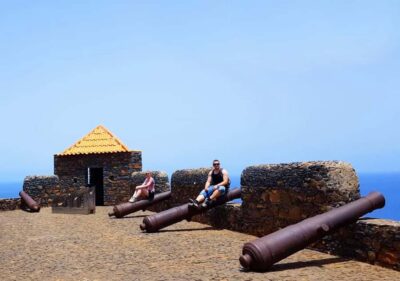
Santiago Island: Highlights of Cidade Velha with Local Guide
Read our review →Browse the lists this tour appears in